Honeywell Control Valve Actuation Technology for Smart Industrial Systems

Industrial automation continues to evolve rapidly, with manufacturers placing greater emphasis on precision control, system integration, and real-time diagnostics. Honeywell’s latest development in control valve actuation technology reflects this shift, introducing a more intelligent and connected approach to valve automation across process industries.
As facilities move toward smarter, data-driven operations, the role of actuators is expanding beyond simple movement. They are becoming critical components in optimising performance, improving safety, and reducing downtime.
A SHIFT TOWARDS SMART ACTUATION
Traditional valve actuators have historically focused on mechanical reliability and basic control. While these remain essential, Honeywell’s latest technology introduces a new layer of intelligence, enabling actuators to provide continuous feedback, diagnostics, and performance insights.
This shift allows operators to monitor valve position, response time, and operating conditions in real time. By doing so, systems can identify inefficiencies or early signs of wear before they develop into failures. In modern process environments, actuators are no longer passive devices — they are active data sources within the control loop.
ENHANCED PRECISION AND CONTROL
One of the key advantages of advanced actuation tech is improved control accuracy. Honeywell’s approach focuses on delivering smoother, more responsive valve positioning, particularly in applications where even small variations can impact process stability.
In industries such as chemical processing, energy, and water treatment, maintaining consistent flow, pressure, or temperature is critical. Enhanced actuator precision supports tighter control, reducing fluctuations and improving overall system efficiency. This is particularly important for control valves operating in modulating applications, where accuracy directly influences product quality and energy consumption.
INTEGRATION WITH DIGITAL CONTROL SYSTEMS
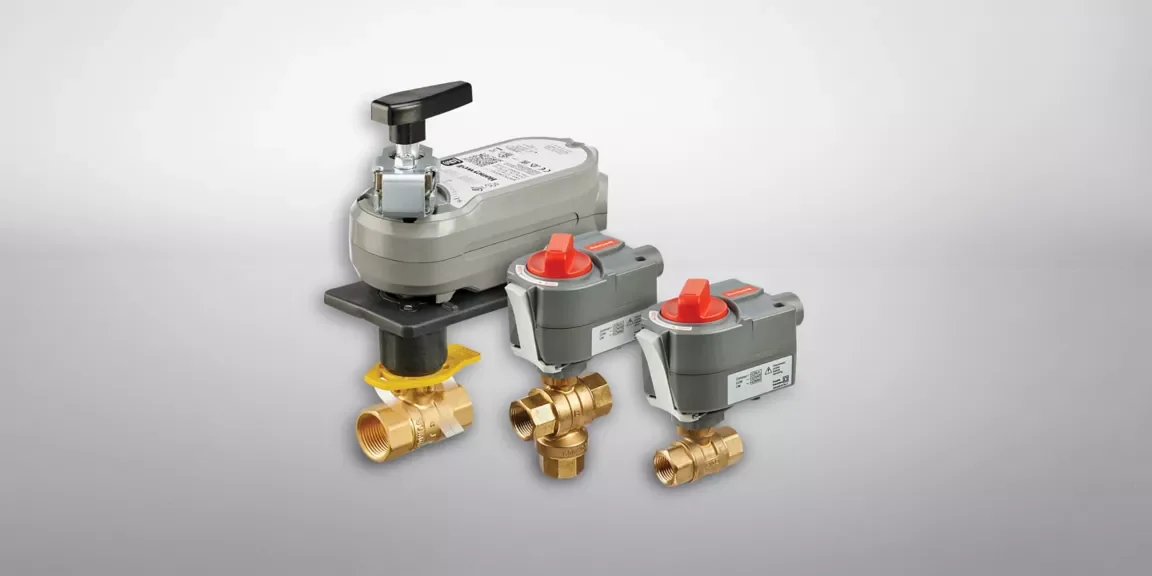
A major feature of modern actuation technology is seamless integration with digital control platforms such as PLC and SCADA systems. Honeywell’s latest solution is designed to communicate efficiently with these systems, enabling centralised monitoring and control.
This level of integration allows operators to access valve performance data remotely, adjust parameters without manual intervention, and respond quickly to process changes.
As industrial systems become more interconnected, actuators play a key role in bridging mechanical equipment with digital infrastructure.
PREDICTIVE MAINTENANCE AND REDUCED DOWNTIME
Unplanned downtime remains one of the biggest challenges in industrial operations. By incorporating advanced diagnostics, Honeywell’s actuation technology supports predictive maintenance strategies.
Instead of relying on scheduled maintenance or reacting to failures, operators can use real-time data to identify trends such as increased torque requirements or slower response times. This allows maintenance teams to intervene before issues escalate, reducing both downtime and repair costs.
In high-demand environments, predictive maintenance is becoming a standard expectation rather than a competitive advantage.
APPLICATIONS ACROSS INDUSTRY
Honeywell’s advanced actuation technology is applicable across a wide range of sectors, including oil & gas, power generation, water treatment, and general process industries. Each of these environments benefits from improved control, enhanced safety, and better visibility into system performance.
As infrastructure becomes more complex and automation levels increase, the demand for intelligent valve solutions will continue to grow. Actuation technology is at the centre of this evolution, supporting both operational efficiency and long-term asset management.
Honeywell’s latest control valve actuation technology highlights the ongoing transformation of industrial automation. By combining precision control with digital connectivity and advanced diagnostics, actuators are evolving into key components of smart industrial systems.
In 2026 and beyond, success in process industries will increasingly depend on the ability to monitor, analyse, and optimise equipment performance in real time. With innovations like this, actuation is no longer just about movement — it’s about intelligence, insight, and control.