ESAB Introduces Smart Welding Technology to Improve Pipeline Joint Consistency
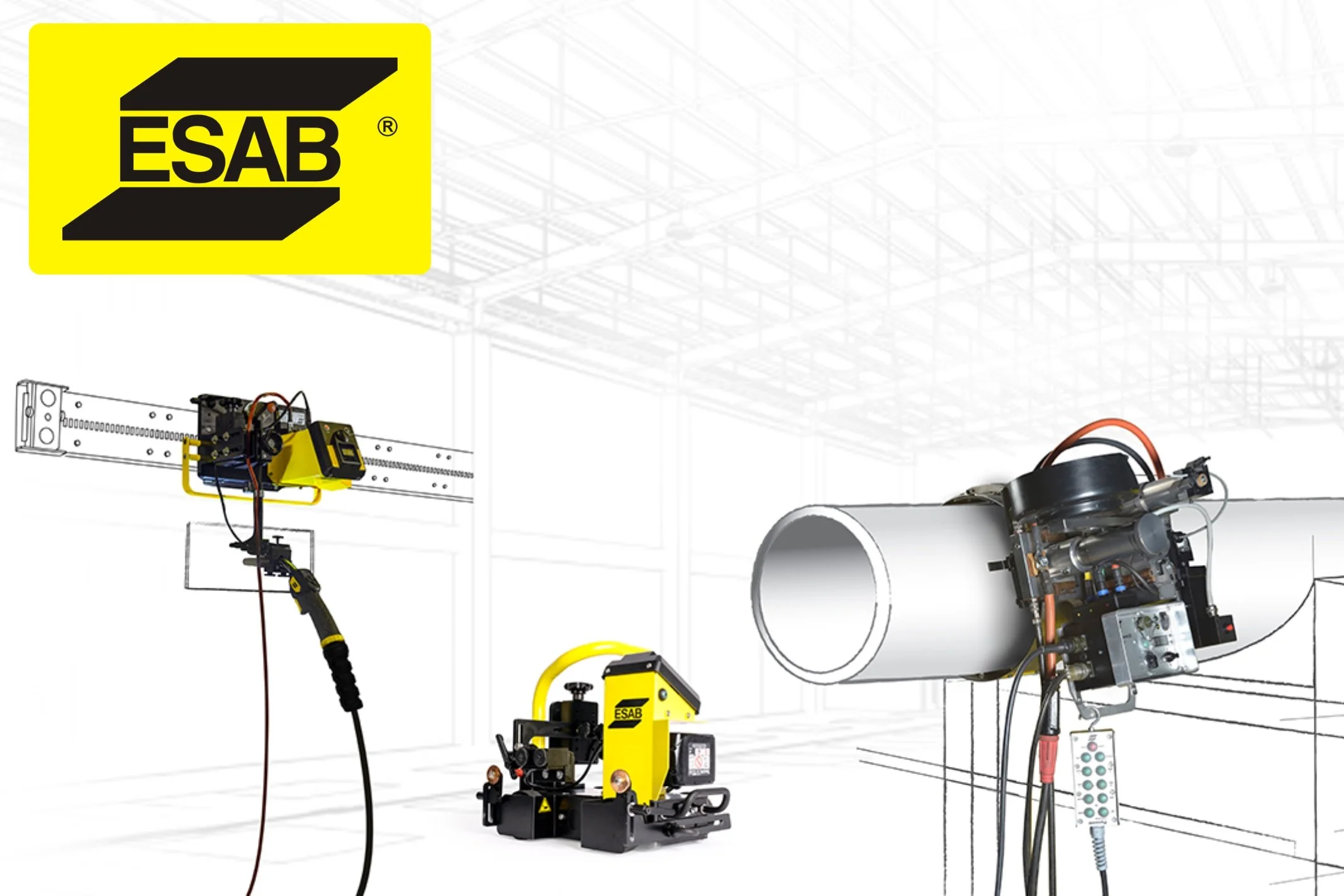
Pipeline construction is evolving rapidly, with increasing pressure on contractors and operators to deliver higher quality welds, faster installation times, and full traceability. ESAB’s latest smart welding technology is a direct response to these demands, introducing a more controlled, data-driven approach to pipeline welding.
As projects scale and operating conditions become more demanding, weld consistency is no longer just a quality target — it is a critical factor in pipeline integrity, safety, and long-term performance.
THE CHALLENGE OF PIPELINE WELD CONSISTENCY
Achieving consistent weld quality across long pipeline runs has always been a challenge. Variations in operator technique, environmental conditions, and material tolerances can all impact the final weld.
In high-pressure or critical service applications, even minor inconsistencies can lead to:
• Reduced joint strength
• Increased risk of defects
• Higher inspection and rework costs
This is why the industry is shifting toward technologies that reduce variability and standardise welding performance. ESAB’s smart welding systems are designed to address this directly, ensuring repeatable, high-quality welds regardless of operator or location.
SMART WELDING: A DATA-DRIVEN APPROACH
ESAB’s latest technology integrates digital monitoring and control into the welding process. Rather than relying solely on manual setup and operator judgement, smart welding systems continuously track key parameters such as heat input, travel speed, and arc stability.
This allows for real-time adjustments, ensuring welds remain within specified tolerances throughout the process. By maintaining tighter control over welding variables, the system helps deliver uniform weld profiles and improved mechanical performance.
In modern pipeline construction, data is becoming just as important as technique.
AUTOMATION AND REDUCED HUMAN ERROR
One of the key benefits of smart welding technology is the reduction of human variability. While skilled welders remain essential, automation assists by guiding and stabilising the process.
This results in:
• More consistent weld penetration
• Reduced risk of defects such as porosity or lack of fusion
• Improved repeatability across multiple welds
For large-scale pipeline projects, where thousands of welds may be required, even small improvements in consistency can have a significant impact on overall project quality and timelines.
TRACEABILITY AND QUALITY ASSURANCE
A major advantage of ESAB’s smart welding solutions is enhanced traceability. Each weld can be digitally recorded, capturing key data points that can be reviewed during inspection or auditing.
This supports:
• Compliance with industry standards
• Faster quality verification
• Clear documentation for project stakeholders
With increasing regulatory requirements and client expectations, traceability is becoming a core requirement in pipeline construction, not just an added benefit.
APPLICATIONS IN MODERN PIPELINE PROJECTS
ESAB’s smart welding technology is particularly valuable in sectors where reliability is critical, including oil & gas, hydrogen infrastructure, and large-scale water transmission systems.
These environments demand welds that can withstand high pressure, temperature changes, and long-term operational stress. By improving consistency and reducing defects, smart welding technology supports safer, more durable pipeline systems.
ESAB’s introduction of smart welding technology highlights a broader shift in pipeline construction toward automation, precision, and data-driven quality control. As infrastructure projects become more complex and performance expectations rise, traditional welding methods are being enhanced with intelligent systems that deliver greater consistency and reliability.
In 2026 and beyond, the success of pipeline projects will increasingly depend on the ability to control and verify every weld. With innovations like this, pipeline welding is moving from a manual craft to a controlled, measurable process.