Flange Pressure Ratings Table: PN, ANSI & ASME
INTRODUCTION: WHY FLANGE RATINGS DESERVE SPECIAL ATTENTION
Flanges are the connection points that hold piping systems together. When flange ratings are misunderstood or mismatched, the result is often leakage, gasket failure, bolt issues, or joint separation. Unlike valves alone, flanges introduce additional variables: bolt patterns, gasket seating, materials, and pressure–temperature limits.
This guide explains PN, ANSI, and ASME flange ratings, how they compare, and provides an easy reference table to avoid costly mistakes.
WHAT FLANGE PRESSURE RATINGS ACTUALLY MEAN
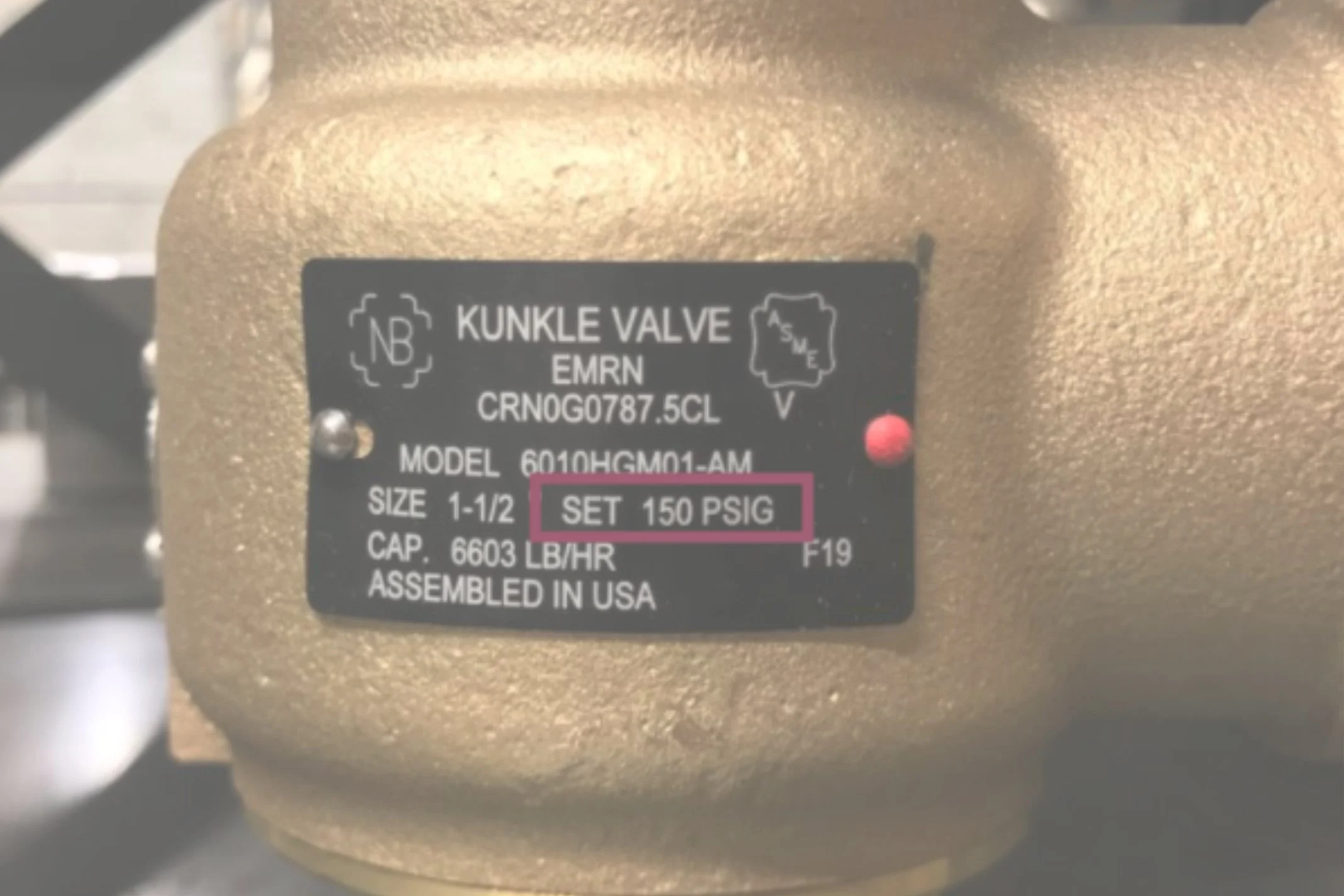
Flange ratings define the maximum allowable pressure a flange can safely withstand at a given temperature. Like valves, flange ratings are not fixed values — they change with temperature and material.
Two main systems dominate the industry:
PN (European / EN standards)
ANSI / ASME Classes (American standards)
They look similar on paper but are governed by different rules.
PN FLANGE RATINGS
PN (Pressure Nominal) flanges are specified in bar and referenced at 20°C.
Common PN flange ratings include:
• PN10
• PN16
• PN25
• PN40
A PN16 flange, for example, is rated to 16 bar at 20°C, with allowable pressure decreasing as temperature increases. PN flanges are widely used across Europe and are common in water, HVAC, and general industrial services.
PN ratings are simple — but only if temperature is respected.
ANSI / ASME FLANGE RATINGS EXPLAINED
ANSI flange ratings are defined by ASME standards and expressed as pressure classes rather than direct pressure values.
Common classes include:
• Class 150
• Class 300
• Class 600
• Class 900
These ratings are material-dependent and must always be checked against pressure–temperature tables. A Class 150 flange does not mean 150 psi — it represents a defined operating envelope that varies with material and temperature.
This is where most errors occur.
PN VS ANSI FLANGE PRESSURE RATINGS TABLE (APPROXIMATE)
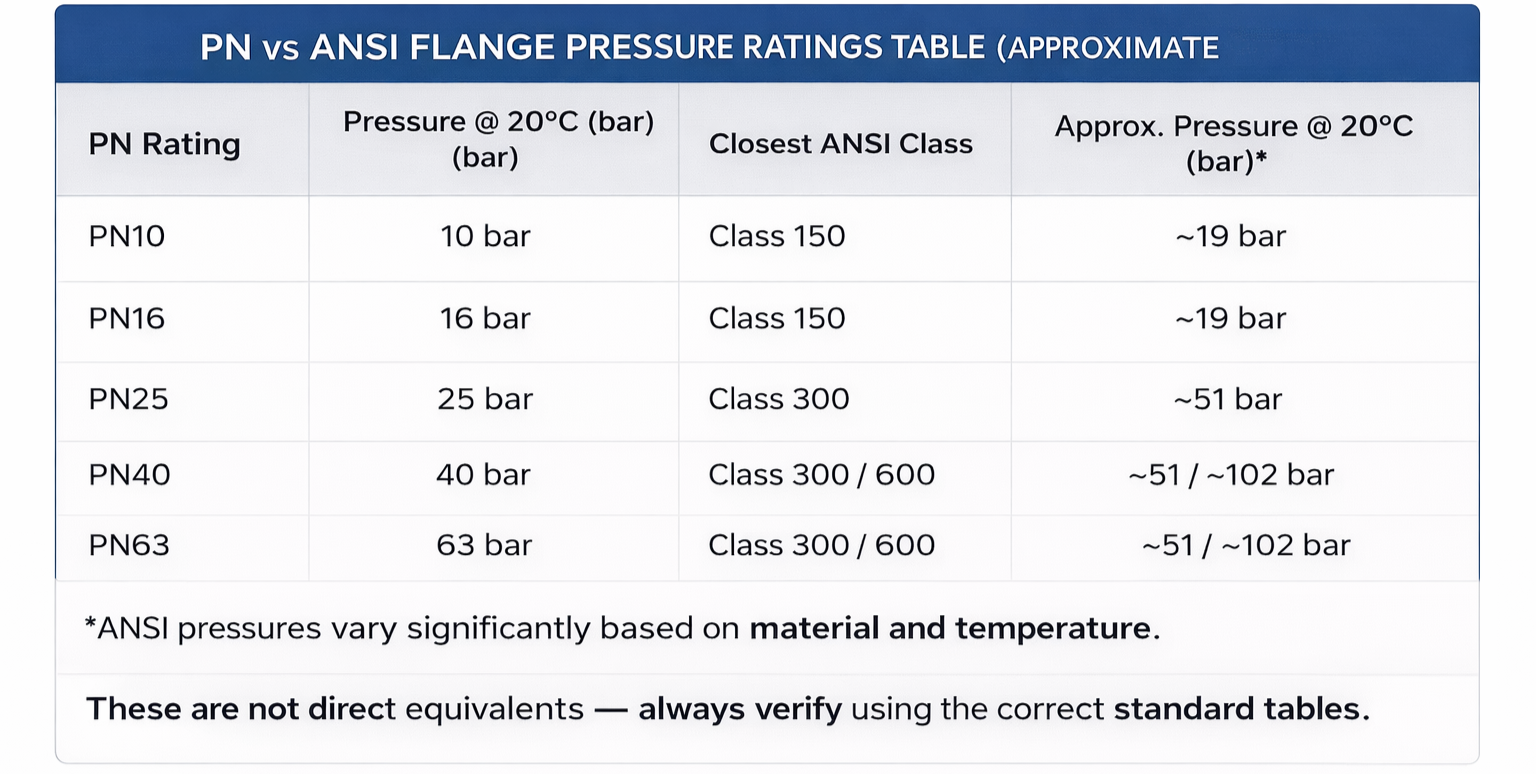
*ANSI pressures vary significantly based on material and temperature.
These are not direct equivalents — always verify using the correct standard tables.
WHY BOLT PATTERNS AND GASKETS MATTER
Even if pressure ratings appear compatible, PN and ANSI flanges often have different bolt hole sizes, quantities, and spacing. This makes them physically incompatible in many cases.
Gasket selection is equally critical. Incorrect gasket material or thickness can reduce sealing effectiveness and limit allowable pressure, regardless of flange rating.
A flange joint is only as strong as its weakest component.
COMMON FLANGE RATING MISTAKES
• Assuming PN and ANSI flanges are interchangeable
• Ignoring temperature de-rating
• Mixing flange standards on the same pipeline
• Selecting gaskets without checking pressure limits
These mistakes frequently lead to leaks during pressure testing or early operation.
WHEN FLANGE RATINGS ARE MOST CRITICAL

Flange ratings matter most in high-pressure, high-temperature, or cyclic systems such as steam, oil & gas, thermal oil, and chemical processing. In these applications, small rating errors quickly become major failures.
Correct flange selection ensures joint integrity, long-term sealing, and safe operation.
FLANGES ARE NOT JUST CONNECTIONS
Flanges are engineered components with defined limits. Treating them as “standard fittings” is a common and expensive mistake.
Understanding PN and ANSI flange ratings — and using tables correctly — protects systems, people, and budgets.