Common Valve Materials Pressure Ratings Table (With Practical Guidance)
WHY MATERIAL CHOICE DIRECTLY AFFECTS PRESSURE RATINGS
Valve pressure ratings don’t exist in isolation. Two valves with the same PN or ANSI rating can perform very differently depending on the material they’re made from. This is because material strength, temperature tolerance, and corrosion resistance all influence how much pressure a valve can safely handle over time.
Understanding valve material pressure ratings is essential for safe operation, compliance, and long-term reliability. This guide explains how common valve materials compare and provides a clear reference table to support correct selection.
WHY MATERIAL MATTERS FOR PRESSURE PERFORMANCE
As pressure increases, stress builds within the valve body, bonnet, and sealing surfaces. Different materials respond differently to that stress, especially as temperature rises.
Some materials retain strength well at elevated temperatures, while others de-rate quickly. Others perform well mechanically but suffer from corrosion or erosion, reducing effective pressure capability over time.
Pressure rating is only valid when the material is suitable for the media, temperature, and environment.
COMMON VALVE MATERIALS EXPLAINED
Industrial valves are typically manufactured from a small group of proven materials, each with distinct characteristics:

• Carbon steel – strong, cost-effective, widely used in steam, oil, and gas
• Stainless steel – corrosion-resistant, hygienic, suitable for aggressive media
• Bronze / brass – common in water and HVAC, lower pressure capability
• Duplex & super duplex – high strength and corrosion resistance for demanding services
• Cast iron / ductile iron – widely used in water systems, limited temperature range
Each of these materials has different allowable pressure–temperature limits defined by standards.
HOW TEMPERATURE AFFECTS MATERIAL PRESSURE LIMITS
All materials lose strength as temperature increases, but the rate varies significantly. Carbon steel maintains pressure capability well up to moderate temperatures, making it popular in steam systems. Stainless steels de-rate differently depending on grade.
Bronze and cast iron de-rate more quickly and are unsuitable for high-temperature or high-pressure applications. Using the wrong material at elevated temperature is one of the fastest ways to exceed pressure limits.
Always refer to pressure–temperature tables for the specific material grade.
SEAT AND SEAL MATERIALS ALSO MATTER
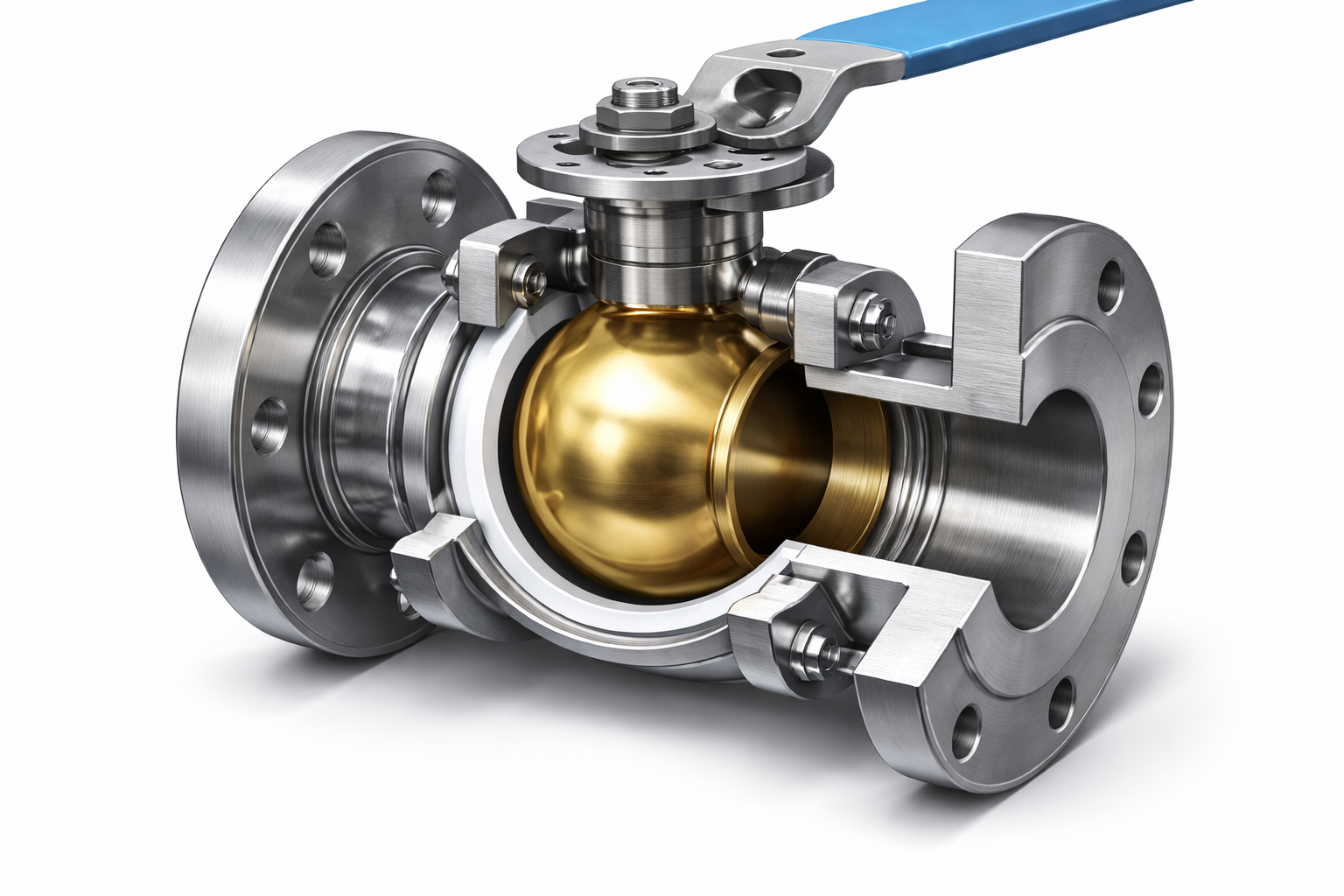
Even if the valve body material supports high pressure, internal components may not. Soft seats, elastomers, and gaskets often impose the lowest allowable temperature and pressure limits.
A metal-bodied valve with a PTFE seat, for example, may be limited by the seat material rather than the body. Ignoring this detail leads to leakage, seat damage, and shortened valve life.
Pressure ratings apply to the entire valve assembly, not just the body.
COMMON MATERIAL SELECTION MISTAKES
• Selecting material based on pressure only, not media
• Ignoring corrosion and erosion effects
• Assuming stainless steel is always “stronger”
• Overlooking seal and seat material limits
These mistakes often lead to gradual failure rather than immediate breakdown, making them harder to diagnose.
WHEN MATERIAL PRESSURE RATINGS ARE MOST CRITICAL
Material pressure limits are especially important in steam, chemical processing, offshore, and high-pressure gas systems. In these environments, small material mismatches can lead to major failures.
Correct material selection ensures pressure ratings remain valid throughout the valve’s service life.
MATERIAL DEFINES REAL PRESSURE CAPABILITY
Valve pressure ratings only make sense when paired with the correct material. Standards provide the limits, but understanding how materials behave in real conditions ensures those limits aren’t exceeded.
The right material doesn’t just meet the pressure rating — it preserves it over time.