Parker Hannifin - New Valve Manifolds
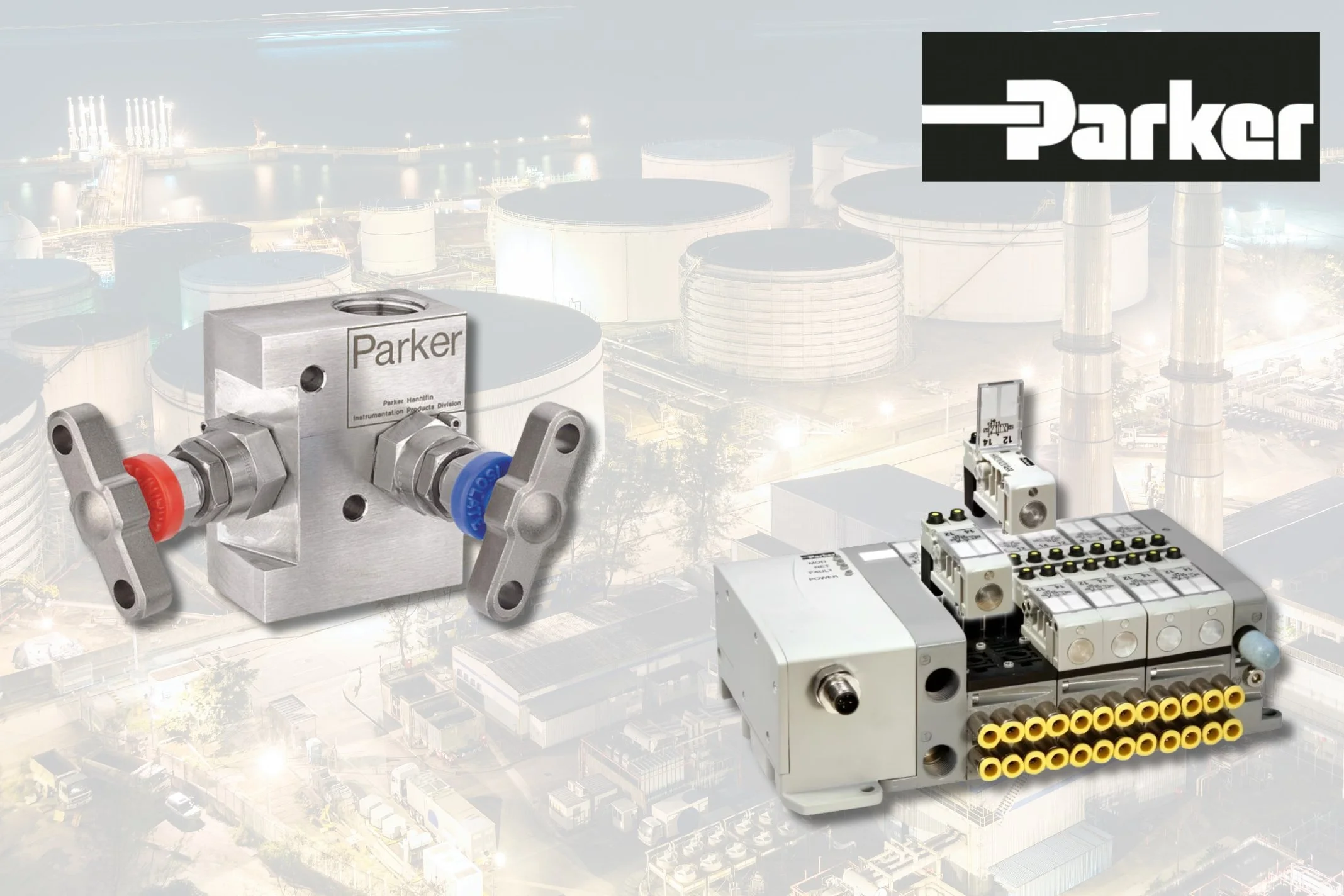
Parker Hannifin has introduced a new range of instrumentation valve manifolds designed specifically for high-pressure and demanding process environments. As industries such as oil & gas, hydrogen, and power generation continue to push operating limits, the need for compact, reliable, and leak-tight instrumentation solutions is increasing.
This latest development reflects a broader industry trend toward higher integrity, improved safety, and enhanced system efficiency in pressure measurement and control applications.
WHAT ARE INSTRUMENTATION VALVE MANIFOLDS?
Instrumentation valve manifolds are used to isolate, equalise, and vent pressure in systems connected to transmitters, gauges, and other measurement devices.
Typically configured as 2-valve, 3-valve, or 5-valve manifolds, they allow operators to:
• Isolate instruments for maintenance
• Equalise pressure across transmitters
• Safely vent process media
• Calibrate systems without shutdown
In high-pressure systems, the performance of these manifolds is critical, as even minor leakage or failure can compromise both measurement accuracy and system safety.
KEY FEATURES OF THE NEW PARKER HANNIFIN RANGE
The newly introduced manifolds are engineered to meet the demands of modern industrial applications where pressure, temperature, and media conditions are increasingly aggressive.
Key enhancements include:
• High-pressure capability suitable for critical applications
• Compact, integrated design to reduce leak paths and installation footprint
• Improved sealing performance for enhanced safety and reliability
• Corrosion-resistant materials for extended service life
• Precision machining to ensure consistent operation and tight shut-off
These features are particularly important in sectors where downtime is costly and system integrity is non-negotiable.
WHY THIS MATTERS FOR HIGH-PRESSURE APPLICATIONS
Instrumentation systems are often overlooked compared to primary valves, but they play a vital role in process control. Poor-quality manifolds can lead to:
• Inaccurate pressure readings
• Increased maintenance requirements
• Safety risks due to leakage
• Premature system failure
By improving manifold design, Parker Hannifin is addressing a key weak point in many systems. Reliable instrumentation ensures reliable process control, especially in high-pressure environments where precision is essential.
APPLICATIONS ACROSS INDUSTRIES

These new manifolds are expected to be widely used across:
• Oil & gas upstream and downstream facilities
• Chemical and petrochemical plants
• Hydrogen and energy transition projects
• Power generation systems
• High-pressure testing and calibration setups
In each of these sectors, operators require robust, traceable, and high-performance instrumentation components that can withstand continuous operation under challenging conditions.
A SHIFT TOWARD COMPACT & INTEGRATED SYSTEMS
One of the key design trends reflected in this launch is the move toward compact, integrated instrumentation assemblies.
By reducing the number of connections, fittings, and potential leak points, modern manifold designs improve:
• Installation efficiency
• System safety
• Long-term reliability
This aligns with broader industry efforts to simplify piping layouts while maintaining high levels of performance and compliance.
Parker Hannifin’s latest instrumentation valve manifold range highlights the growing importance of high-quality secondary components in modern process systems. As operating pressures increase and system expectations rise, instrumentation reliability is becoming just as critical as primary valve performance.
For engineers and specifiers, this development reinforces the need to carefully evaluate not only major equipment, but also the supporting components that ensure accurate measurement, safe operation, and long-term system stability.