Why Smart Speed Control Valves Are Growing in Pneumatic Automation Systems

Pneumatic automation systems are becoming more advanced, more connected, and more safety-focused. As factories push for greater efficiency and better process control, traditional manual adjustments are increasingly being replaced by smart, remotely adjustable components.
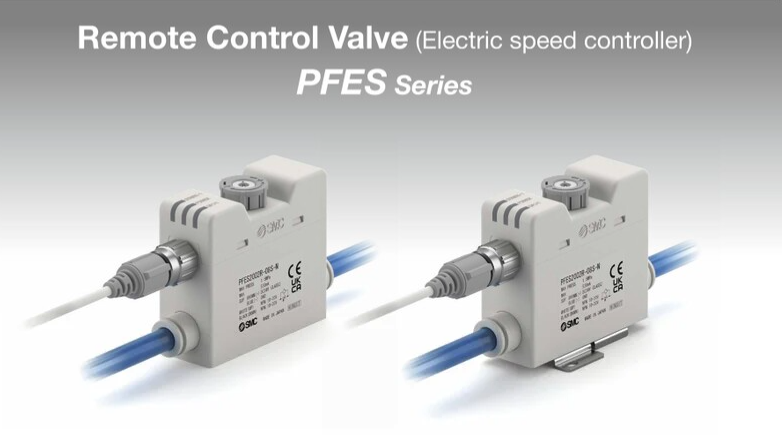
One area seeing rapid innovation is smart speed control valves, which regulate the movement speed of pneumatic actuators and cylinders. Manufacturers such as SMC are introducing solutions like the PFES series, designed to allow remote adjustment and digital integration.
But why is this technology gaining traction so quickly across automation systems?
WHAT A SPEED CONTROL VALVE ACTUALLY DOES
In pneumatic systems, actuators move because compressed air flows into or out of a cylinder. A speed control valve regulates this airflow, allowing engineers to control how quickly a cylinder extends or retracts.
This is critical for many applications, including:
• Pick-and-place automation
• Packaging machinery
• Assembly line robotics
• Valve actuation systems
• Material handling equipment
Without proper speed control, cylinders can move too quickly, causing mechanical shock, vibration, or product damage.
WHY TRADITIONAL ADJUSTMENT METHODS ARE LIMITING
Historically, speed control valves were adjusted manually using small needle screws located on the valve body. While simple, this approach has several drawbacks.
Engineers often need to:
• Stop machinery to adjust settings
• Physically access components in tight spaces
• Test multiple times to achieve correct speed
In modern automated facilities where uptime is critical, these manual adjustments can become inefficient. This is one of the reasons digitally adjustable speed control valves are gaining attention.
HOW SMART SPEED CONTROL VALVES CHANGE THE GAME
Smart speed control valves allow airflow restrictions to be adjusted remotely or electronically rather than manually.
This brings several advantages:
• Faster system setup and commissioning
• Remote adjustments without stopping production
• More precise control over actuator motion
• Reduced mechanical shock and equipment wear
In automated factories, these capabilities support the broader shift toward Industry 4.0 and connected manufacturing systems.
SMC’S PFES SERIES: A NEW APPROACH
SMC’s PFES series is a recent example of how manufacturers are developing smarter pneumatic components.
The concept behind the PFES design is simple:
allow engineers to adjust actuator speed remotely through electrical signals or system control platforms.
This enables:
• Remote parameter adjustments
• Improved safety by reducing manual intervention
• Faster optimisation of machine cycles
In complex production environments, the ability to fine-tune actuator motion without accessing the equipment directly can significantly improve operational efficiency.
WHY SAFETY IS DRIVING ADOPTION
Beyond efficiency, safety is another major factor behind the growth of smart speed control technology.
Manual adjustment often requires technicians to work near moving equipment. By allowing settings to be changed remotely, smart valves reduce the need for direct interaction with machinery.
This supports safer maintenance practices and aligns with modern factory safety strategies where automation reduces human exposure to mechanical risk.
WHERE THIS TECHNOLOGY IS BEING USED

Smart pneumatic speed control valves are appearing in a wide range of industrial applications.
Common examples include:
• Automated packaging systems
• Automotive production lines
• Electronics assembly equipment
• Pharmaceutical production machinery
• Industrial robotics
In each case, precise actuator control helps maintain consistent motion, improved reliability, and reduced component wear.
THE FUTURE OF PNEUMATIC CONTROL
The broader trend across automation is clear: components are becoming smarter, more connected, and easier to manage remotely.
Speed control valves are following this path. Instead of being passive mechanical parts, they are evolving into digitally adjustable system components that can be monitored and optimised within automated control environments.
As factories continue moving toward fully connected production systems, smart pneumatic devices like the PFES series are likely to become more common.
CONCLUSION
Smart speed control valves represent a practical but important step forward in pneumatic automation. By allowing remote adjustment, improving safety, and enabling more precise actuator control, these devices support the wider shift toward connected manufacturing systems.
Manufacturers like SMC are leading the way with products such as the PFES series, demonstrating how even small components can play a major role in improving efficiency, safety, and automation performance.