CRC Evans New Mechanised Welding System
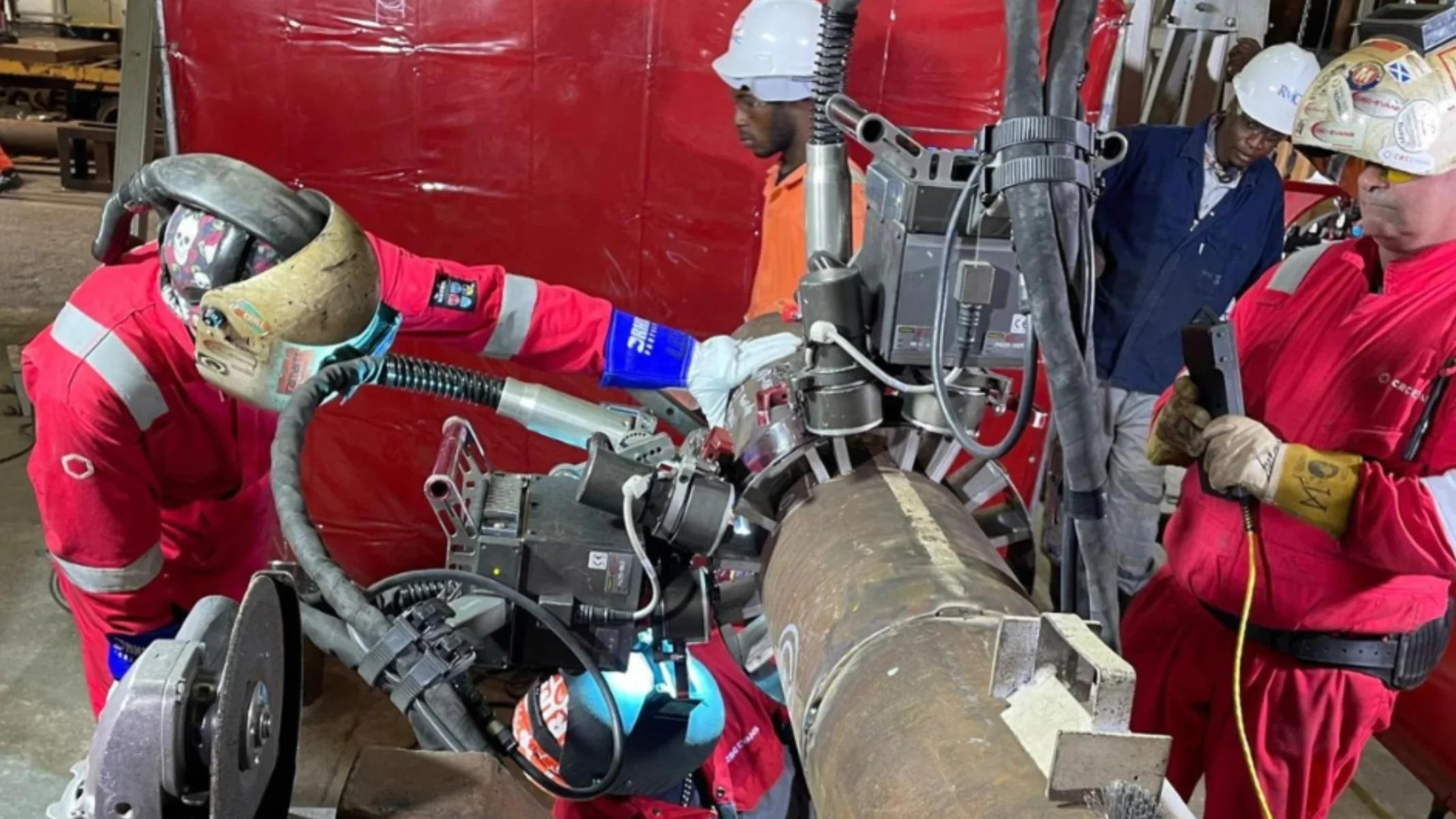
Pipeline construction is evolving rapidly as operators demand faster installation, higher weld quality, and greater consistency across long-distance projects. CRC Evans, a well-known specialist in pipeline welding technology, has introduced a new mechanised welding system designed specifically for onshore pipeline applications.
This latest development reflects a broader industry shift toward automation, where traditional manual welding methods are being replaced or supported by systems that deliver repeatable quality, improved safety, and increased productivity.
WHY MECHANISED WELDING IS GAINING MOMENTUM
Manual welding has long been the standard in pipeline construction, but it comes with limitations. Variability between welders, environmental conditions, and fatigue can all affect weld quality. As pipeline projects grow in scale and complexity, consistency becomes critical.
Mechanised welding systems address this by using controlled parameters to produce uniform welds across every joint. This reduces the risk of defects and minimises rework. In modern pipeline construction, consistency is just as important as speed, and mechanised systems are helping bridge that gap.
WHAT CRC EVANS’ NEW SYSTEM BRINGS TO THE MARKET
CRC Evans’ latest system focuses on improving both performance and usability in onshore environments. The system is designed to support high-productivity welding processes while maintaining strict quality standards, even in challenging field conditions.
A key advantage is the ability to control weld parameters precisely, ensuring consistent heat input and penetration. This leads to stronger, more reliable welds that meet stringent inspection requirements. The system also integrates with existing pipeline construction workflows, making it easier for contractors to adopt without major disruption.
As projects increasingly demand tight schedules and high integrity welds, systems like this provide a practical solution.
IMPACT ON PROJECT SPEED AND COST
One of the most significant benefits of mechanised welding is the reduction in overall project time. Faster welding cycles and reduced rework mean pipelines can be completed more efficiently.
Labour requirements can also be optimised. While skilled operators are still essential, mechanised systems reduce reliance on large welding crews and minimise variability between shifts. Over the lifecycle of a project, this translates into lower costs, improved scheduling, and more predictable outcomes.
For contractors working on long-distance pipelines, even small efficiency gains per weld can result in major time savings across thousands of joints.
QUALITY, INSPECTION, AND COMPLIANCE
Pipeline welds must meet strict inspection standards, often involving radiographic or ultrasonic testing. Mechanised welding systems improve first-time pass rates by delivering consistent weld profiles and reducing defects such as lack of fusion or porosity.
With tighter control over welding parameters, operators can ensure compliance with project specifications and international standards. This is particularly important in sectors such as oil & gas and energy infrastructure, where weld integrity directly impacts safety and long-term performance.
THE FUTURE OF PIPELINE WELDING
The introduction of advanced mechanised systems highlights the direction the industry is heading. Automation, data capture, and digital integration are becoming standard features in pipeline construction.
Future developments are likely to include:
• Greater integration with digital inspection systems
• Real-time weld data monitoring
• Enhanced mobility for remote or difficult terrains
As pipeline infrastructure expands — particularly in energy transition projects such as hydrogen and carbon capture — the demand for reliable, high-quality welding solutions will continue to grow.
CRC Evans’ new mechanised welding system represents another step forward in pipeline construction technology. By combining precision control with improved productivity, it addresses some of the key challenges facing onshore pipeline projects today.
In an industry where quality, speed, and safety are non-negotiable, mechanised welding is no longer a niche solution — it is becoming the standard.