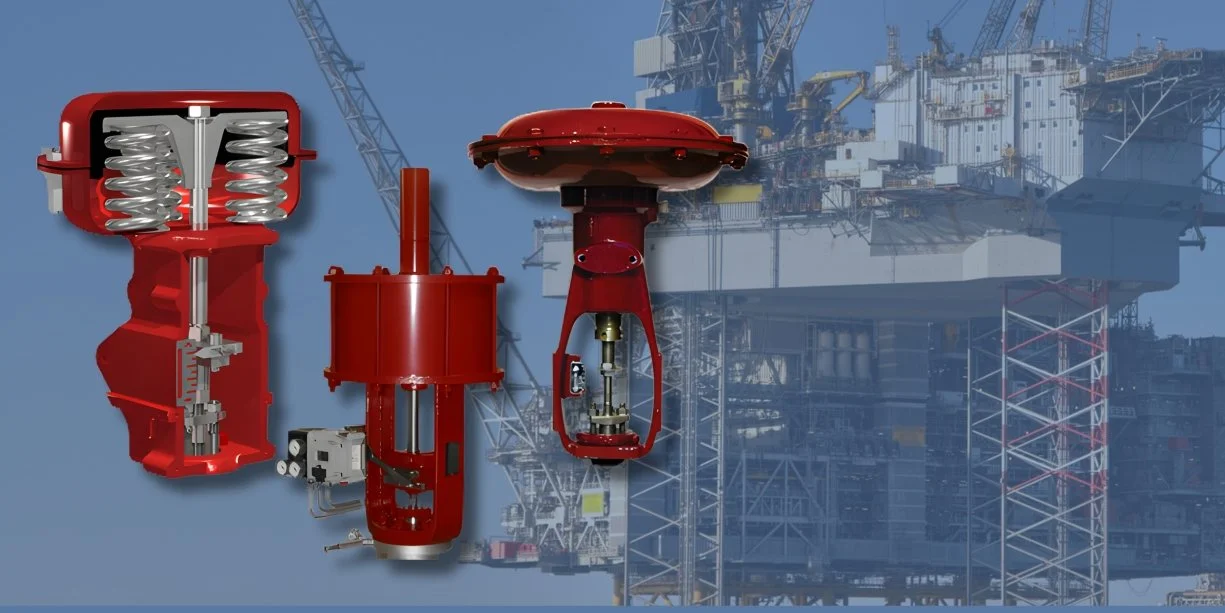
What Is an Actuator? A Complete Beginner’s Guide
INTRODUCTION: WHY ACTUATORS EXIST
In many systems, a valve on its own isn’t enough. While valves control the flow of liquids, gases, or steam, actuators are what actually move the valve. They replace manual effort with controlled, repeatable motion, allowing valves to open, close, or position automatically.
In modern industrial environments, automation is essential. Systems need to respond quickly, operate remotely, and run safely without constant human intervention. This is where actuators come in. Simply put, an actuator converts energy into movement, enabling valves and other equipment to operate reliably and consistently.
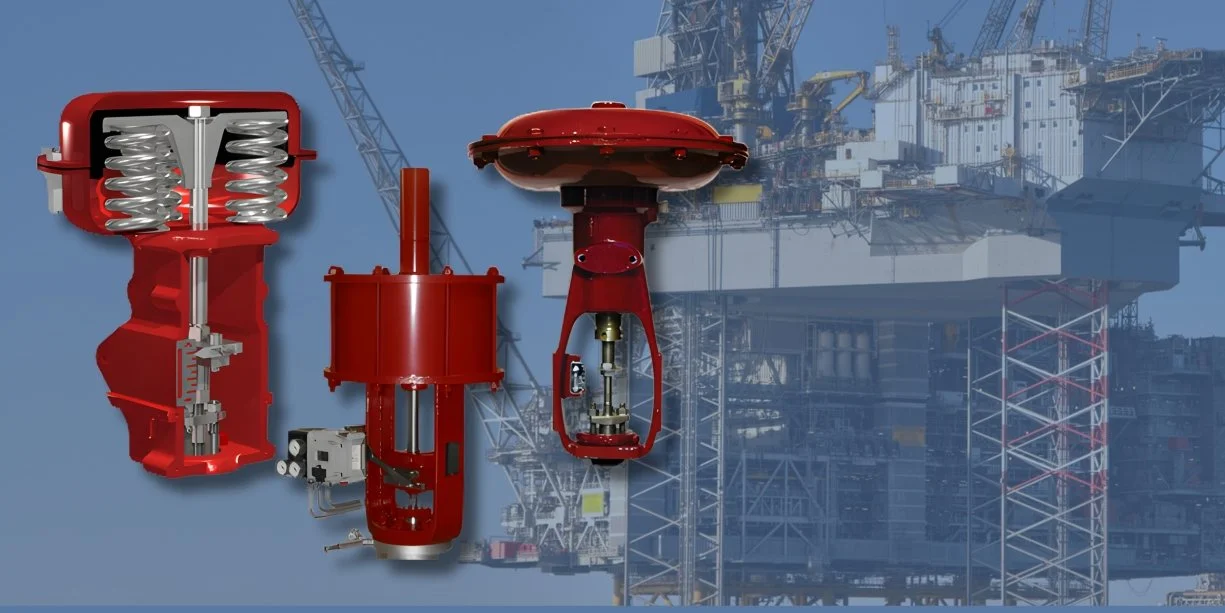
WHAT DOES AN ACTUATOR DO?
An actuator’s job is to apply force and motion to a mechanism. In valve applications, this usually means rotating a valve stem or pushing it linearly to change the valve position. Instead of a person turning a handle, the actuator does the work.
Actuators can perform simple open-and-close actions or provide precise positioning for flow control. In automated systems, actuators are often linked to sensors and control systems, allowing equipment to respond instantly to pressure, temperature, or flow changes.
Without actuators, large-scale industrial automation would not be possible.
HOW DO ACTUATORS WORK?
All actuators follow the same basic principle: input energy is converted into mechanical movement. The type of energy used defines the actuator type.
Pneumatic actuators use compressed air to create motion. Electric actuators use an electric motor. Hydraulic actuators rely on pressurised fluid. Each method produces movement that is transferred through internal gears, pistons, or mechanisms to operate the valve.
Some actuators move in a straight line, while others rotate. The choice depends on the valve type, torque or force requirements, and how the system needs to behave during operation or failure.
COMMON TYPES OF ACTUATORS
There is no single actuator suitable for every application. The most common types include:
Pneumatic actuators, valued for speed, simplicity, and reliability
Electric actuators, offering precise control and easy integration with control systems
Hydraulic actuators, used where very high forces are required
Actuators can also be classified by motion. Linear actuators move components up and down, while rotary actuators turn valves through a set angle, typically 90 or 180 degrees.
WHY ACTUATORS ARE IMPORTANT IN INDUSTRIAL SYSTEMS
Actuators improve safety by allowing remote operation and automatic shutdowns. They improve efficiency by delivering consistent, repeatable movement. They also reduce human error and physical strain in demanding environments.
In many industries, actuators are not optional — they are essential. As systems become more automated, actuators form the link between control signals and physical action.
Understanding actuator basics is the first step toward reliable, safe, and efficient automation.