Pneumatic vs Electric Actuators Explained
INTRODUCTION: TWO WAYS TO AUTOMATE A VALVE
When it comes to automating industrial valves, two technologies dominate the landscape: pneumatic actuators and electric actuators. Both are designed to replace manual operation, allowing valves to open, close, or modulate automatically — but they do so in very different ways.
Choosing between pneumatic and electric actuation isn’t about which is “better” overall. It’s about which is better suited to the application. Factors such as environment, control requirements, speed, safety, and infrastructure all influence the decision. Understanding the strengths and limitations of each is essential for reliable and efficient valve automation.
HOW PNEUMATIC ACTUATORS WORK
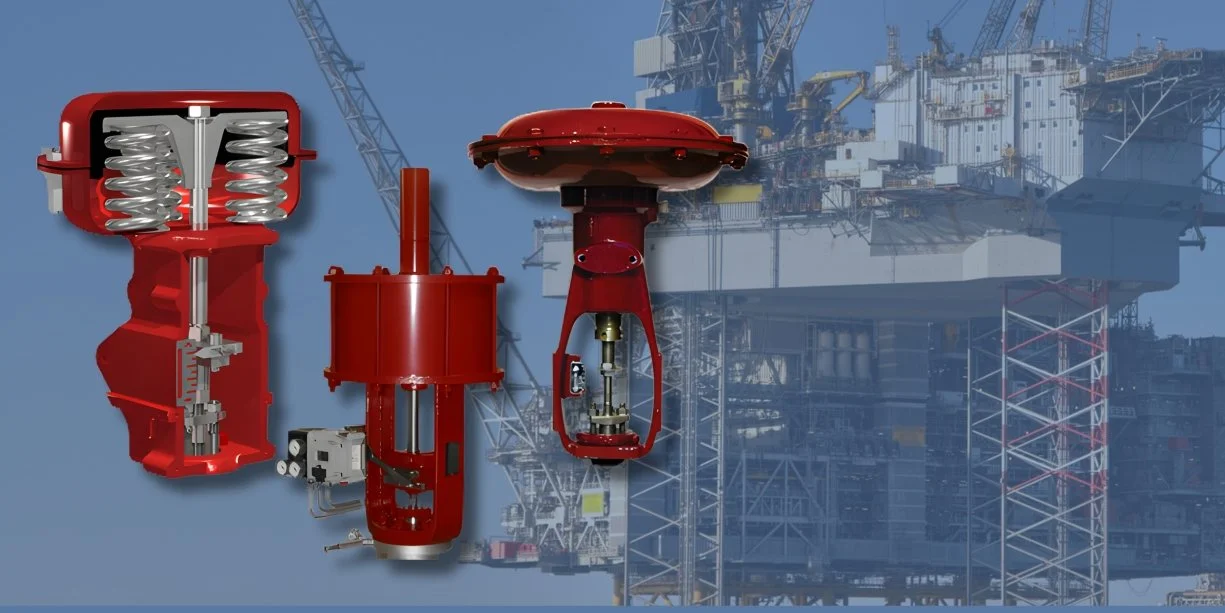
Pneumatic actuators use compressed air to generate mechanical movement. When air pressure is applied to the actuator, it drives a piston or vane that converts this energy into rotational or linear motion, operating the valve.
These actuators are commonly found in industrial environments where compressed air is already available. Pneumatic systems are valued for their simplicity, speed, and robustness. Because air is compressible and non-sparking, pneumatic actuators are particularly well suited to hazardous or explosive environments.
Pneumatic actuators are typically used for on/off or fail-safe applications, with spring-return designs allowing valves to move to a safe position automatically in the event of air or power loss.
HOW ELECTRIC ACTUATORS WORK
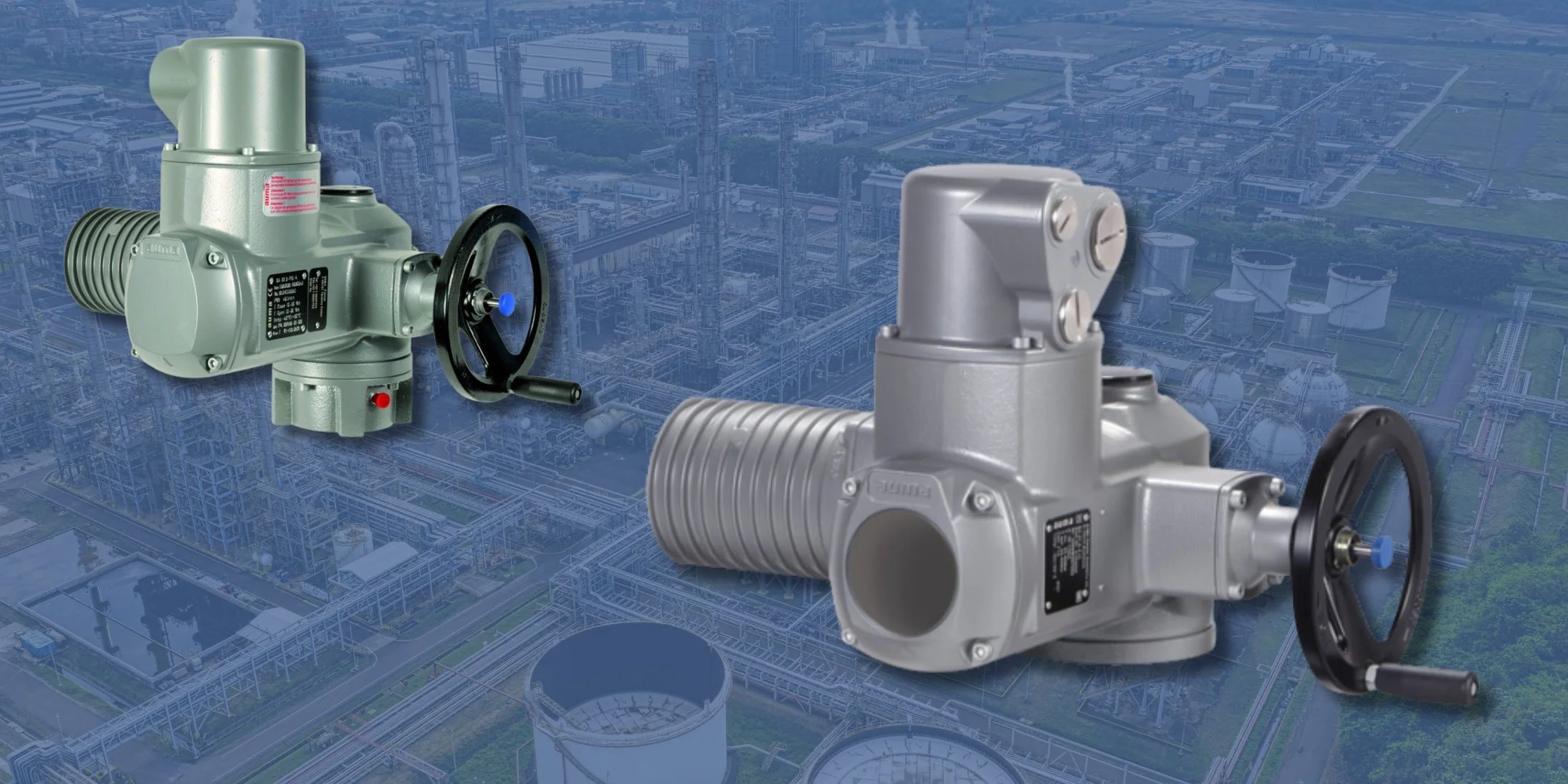
Electric actuators operate using an electric motor combined with a gearbox to generate torque and movement. When a control signal is received, the motor drives the valve to a precise position.
Unlike pneumatic actuators, electric actuators do not require compressed air, making them ideal for installations where air infrastructure is unavailable or impractical. They excel in applications requiring precise positioning, modulating control, and feedback.
Electric actuators are commonly used in building services, water treatment, HVAC, and applications where fine control and integration with control systems are critical.
KEY DIFFERENCES BETWEEN PNEUMATIC AND ELECTRIC ACTUATORS
The most noticeable difference lies in their power source. Pneumatic actuators rely on compressed air, while electric actuators rely on electricity. This alone can determine suitability depending on site conditions.
Pneumatic actuators are generally faster, simpler, and more tolerant of harsh environments. They are often preferred in process industries where reliability and safety take priority over precision.
Electric actuators offer greater control accuracy, smoother modulation, and easier integration with modern control systems. However, they can be more sensitive to environmental conditions such as moisture, temperature extremes, or vibration if not correctly specified.
Neither option is universally superior — each excels in different scenarios.
WHICH SHOULD YOU CHOOSE?
Choosing between pneumatic and electric actuation comes down to application requirements. If the system demands fast operation, fail-safe functionality, and hazardous area compatibility, pneumatic actuators are often the best choice.
If the application requires precise positioning, variable control, or minimal infrastructure, electric actuators may be more suitable. Consider also long-term maintenance, energy consumption, and control system integration.
The most successful automation systems are those where actuator selection aligns with the valve type, process conditions, and operational goals.