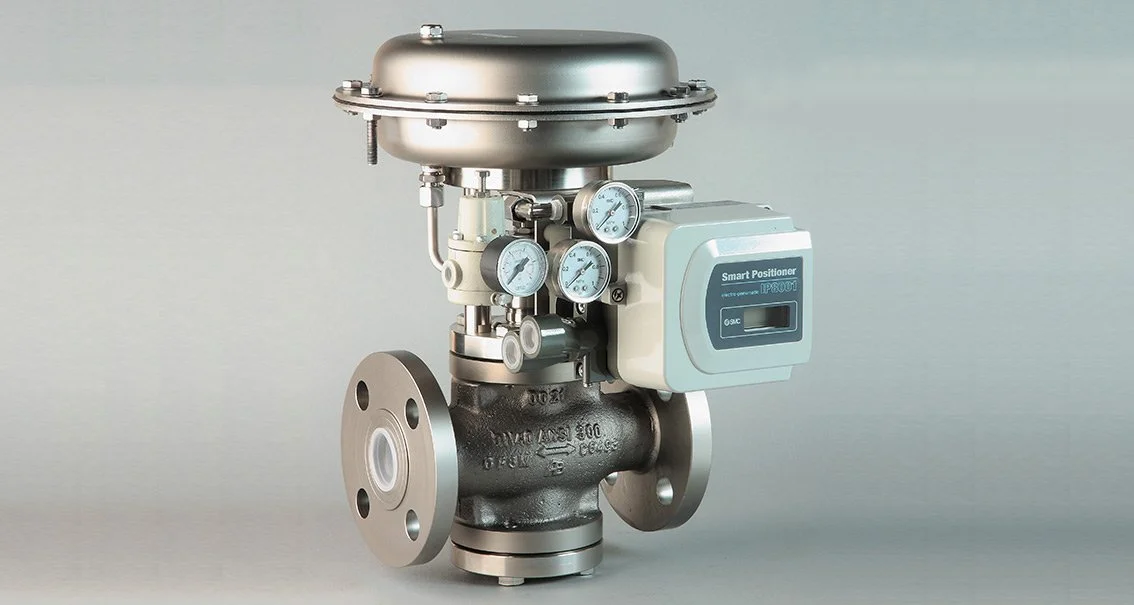
Smart Valve Positioner Upgrades Drive Next Phase of Digital Process Control
Summary
New generation smart valve positioners introduced with enhanced diagnostics and connectivity
Improved integration with digital control systems and predictive maintenance platforms
Growing shift toward data-driven valve automation across process industries

The latest wave of smart valve positioner upgrades signals a continued shift toward digitalised process control across energy, chemical, and industrial sectors.
While actuators physically move valves, positioners ensure that the valve reaches and maintains the precise position demanded by the control system. Modern smart positioners are no longer simple feedback devices — they are becoming intelligent monitoring and diagnostic tools embedded within automation infrastructure.
Recent product updates across the industry have focused on expanding diagnostic capability, improving digital communication protocols, and strengthening predictive maintenance features.
From Basic Positioning to Intelligent Monitoring
Traditional positioners were primarily responsible for ensuring accurate stem movement in response to a control signal.
Modern smart positioners now provide:
Continuous valve performance monitoring
Real-time feedback to distributed control systems (DCS)
Early detection of wear or seat degradation
Travel deviation alerts
Friction and hysteresis analysis
These capabilities allow operators to identify developing faults before they cause unplanned shutdowns.
Instead of reacting to failure, plants can now anticipate it.
Digital Integration & Communication Protocols
One of the most significant developments in new smart positioner releases is improved digital connectivity.
Enhanced support for protocols such as:
HART
Foundation Fieldbus
Profibus
Modbus
This ensures that valve data is not isolated at the field level but becomes part of the broader plant intelligence system.
Data-driven automation is increasingly central to process optimisation, and smart positioners are now key contributors to that ecosystem.
Supporting Predictive Maintenance Strategies
Industrial operators are under pressure to maximise uptime while reducing maintenance costs.
Smart positioner upgrades contribute to predictive maintenance by:
Tracking valve stroke counts
Monitoring actuator air consumption
Identifying abnormal movement patterns
Flagging calibration drift
Rather than performing scheduled maintenance regardless of condition, operators can now align servicing with actual performance indicators.
This shift reduces unnecessary downtime while improving reliability.
Industry Impact Across Sectors
The impact of enhanced smart positioner technology is particularly evident in sectors such as:
Oil and gas
Power generation
Chemical processing
Water and wastewater treatment
District energy systems
In these environments, control valve performance directly affects process stability, safety, and energy efficiency.

Improved diagnostics reduce the risk of:
Valve sticking
Inaccurate flow control
Oscillation within control loops
Premature trim wear
By strengthening visibility at the valve level, smart positioners support more stable plant operation.
A Broader Automation Trend
The evolution of smart valve positioners reflects a larger transformation within industrial automation.
Equipment is no longer viewed purely as mechanical hardware. Instead, components are expected to contribute data, insight, and performance transparency.
The modern control valve assembly is becoming a data-generating asset, not simply a flow regulator.
Manufacturers are responding by embedding advanced analytics directly into field devices, reducing reliance on separate monitoring systems.
Wrap Up
The latest upgrades in smart valve positioner technology reinforce the growing importance of digital integration and predictive maintenance within industrial automation.
By combining accurate positioning with advanced diagnostics and connectivity, these new-generation devices strengthen system reliability while supporting smarter operational decision-making.
As process industries continue to modernise, intelligent valve control components will play an increasingly central role in plant performance and long-term efficiency.