Steam & Thermal Process Industry Glossary (A–Z)
INTRODUCTION
Steam and thermal process systems are among the most demanding environments in industry. High temperatures, pressure fluctuations, condensate, and rapid cycling mean that terminology is precise for a reason. Misunderstanding a single term on a specification or P&ID can lead to incorrect valve selection, inefficiency, or safety risks.
This Steam & Thermal Process Industry Glossary provides a clear A–Z reference for engineers, maintenance teams, plant operators, and procurement professionals working with boilers, steam distribution, condensate return, and thermal control systems.
A–Z GLOSSARY (STEAM & THERMAL PROCESS)
A – Actuated Valve
A valve fitted with an electric, pneumatic, or hydraulic actuator to allow remote or automatic operation. Actuated valves are common in steam systems where manual operation would be unsafe or impractical.
B – Blowdown
The controlled removal of water from a boiler to reduce dissolved solids and impurities. Blowdown valves must handle high temperature, pressure, and erosive flow reliably.
B – Boiler
A closed vessel where water is heated to produce steam. Boiler operating pressure and temperature dictate the pressure class and materials required for all downstream valves.
C – Condensate
Water formed when steam releases its latent heat and condenses. Efficient condensate removal is critical to maintain heat transfer and prevent system damage.
C – Condensate Return System
Pipework and equipment used to return condensate to the boiler. Proper valve selection here improves efficiency and reduces water and energy costs.
C – Control Valve
A valve designed to regulate flow, pressure, or temperature continuously. In steam systems, control valves are used to modulate heat input to processes and heat exchangers.
D – Desuperheater
A device used to reduce superheated steam temperature by injecting water. Control valves used with desuperheaters must respond accurately and tolerate thermal shock.
E – Erosion
Material loss caused by high-velocity steam or flashing condensate. Erosion-resistant trims and correct valve sizing help extend service life.
F – Flash Steam
Steam formed when hot condensate experiences a pressure drop. Flash steam must be managed correctly to avoid noise, vibration, and energy loss.
F – Fire Safe Valve
A valve designed to maintain sealing capability during and after a fire. Fire safe design is often required in steam and thermal oil applications for safety compliance.
G – Globe Valve
A linear valve commonly used for steam isolation and control. Globe valves offer excellent throttling performance but higher pressure drop than quarter-turn valves.
H – Heat Exchanger
Equipment that transfers heat from steam to a process medium. Valves controlling steam flow into heat exchangers directly affect temperature stability and efficiency.
I – Isolation Valve
A valve used to completely shut off steam flow for maintenance or safety. Reliable isolation is critical due to the hazards associated with live steam.
L – Latent Heat
The energy released when steam condenses into water. Steam systems rely on latent heat transfer, which is why condensate removal is so important.
M – Modulating Control
The ability of a valve to adjust position continuously rather than simply open or close. Modulating valves are essential for accurate temperature control.
P – Pressure Reducing Valve (PRV)
A valve used to reduce steam pressure to a safe or usable level downstream. PRVs protect equipment and stabilise steam networks.
P – Pressure Class
A rating that defines the maximum allowable pressure at a given temperature. Steam valves must be selected based on both pressure and temperature, not pressure alone.
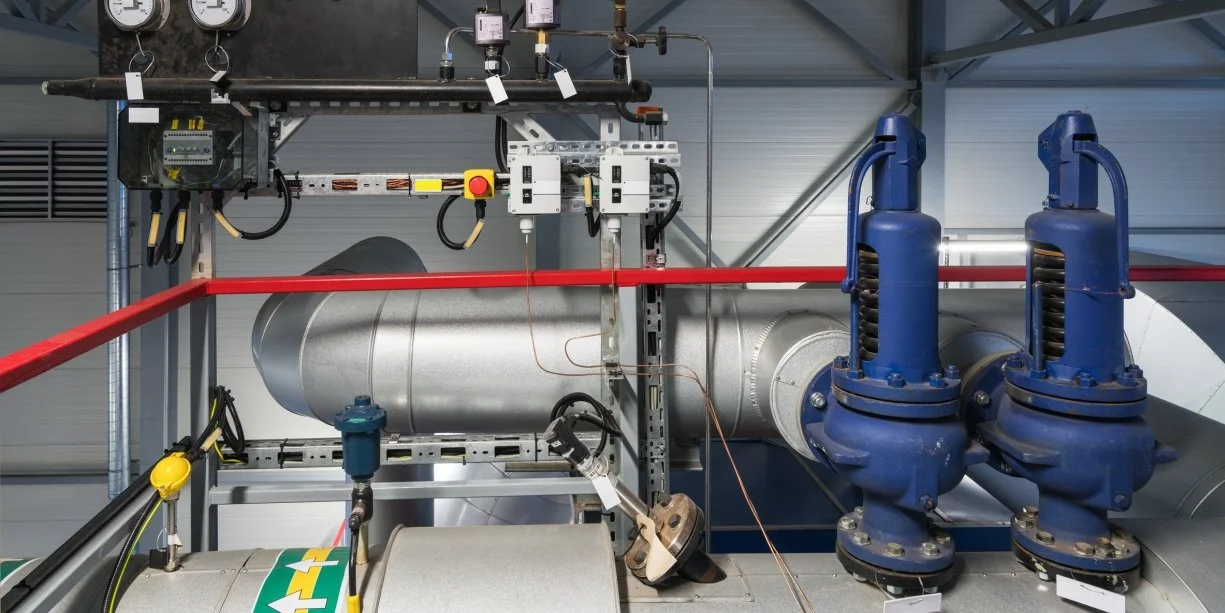
S – Safety Relief Valve
A protective valve that automatically releases pressure when a set limit is exceeded. Safety valves are critical components in boiler and steam systems.
S – Saturated Steam
Steam that exists at the same temperature as boiling water for a given pressure. Most industrial steam systems operate using saturated steam.
S – Steam Trap
A device that removes condensate and non-condensable gases from steam systems while preventing steam loss. Correct steam trap selection improves efficiency and prevents water hammer.
S – Superheated Steam
Steam heated beyond its saturation temperature. Superheated steam carries more energy but requires valves designed for higher temperatures.
T – Thermal Shock
Stress caused by rapid temperature changes. Valves exposed to thermal shock must be designed with suitable materials and clearances to prevent cracking or leakage.
T – Throttling
Restricting flow by partially closing a valve. Only valves designed for throttling should be used this way in steam systems.
W – Water Hammer
A pressure surge caused by sudden condensation or rapid valve closure. Water hammer can damage valves, pipework, and equipment if not controlled.
Y – Y-Strainer
A filter fitting installed upstream of steam traps, PRVs, and control valves to remove debris. Regular cleaning is essential to maintain performance and prevent failure.